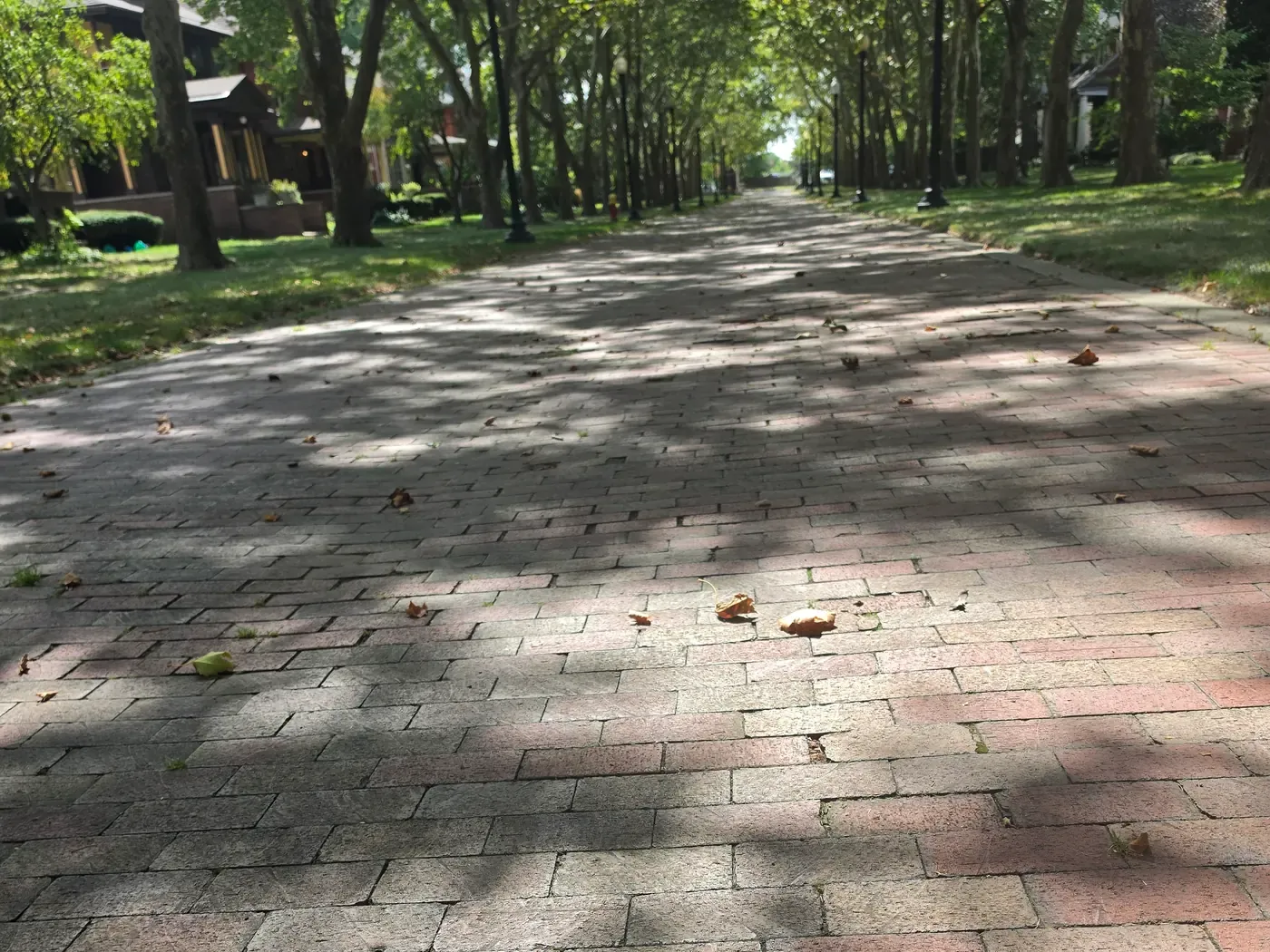
The paving
A brick walkway takes different care than asphalt. It settles, it heaves in the freeze, and repairs happen by hand instead of by machine.
New Center Area Historic District, Detroit
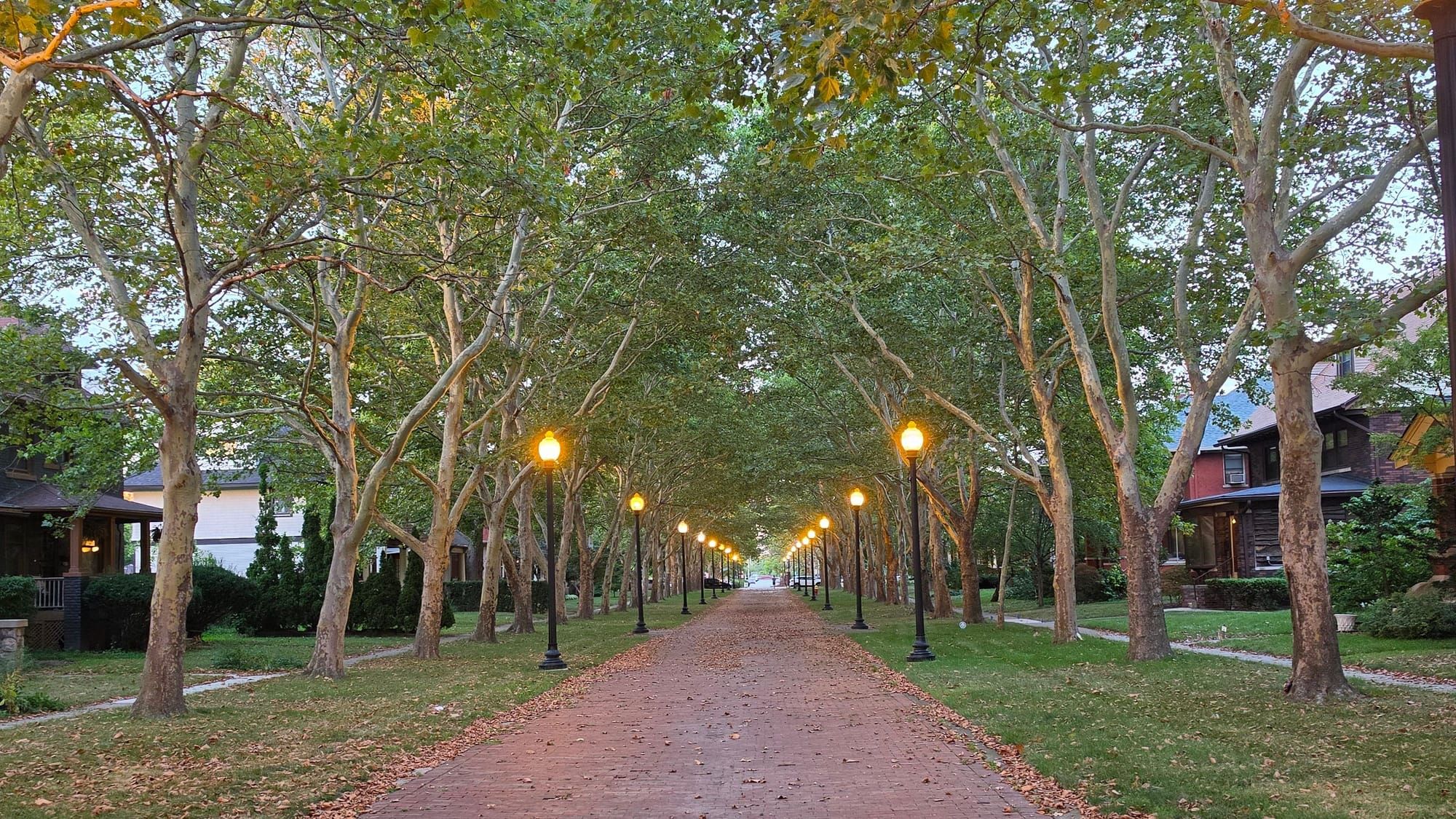
Two blocks from the Fisher Building, on a street the automobile was politely asked to leave.
Albert Kahn finished the Fisher Building in 1928, and for a while New Center was Detroit's second downtown, with General Motors, the theatre, the shops, and the whole apparatus of a company town built at the scale of a boulevard.
Pallister sits just behind it, and it was never grand. Frame houses on narrow lots, built in the early 1910s for the people who worked in buildings like that rather than the people who commissioned them: two storeys, hip roofs, covered porches, painted siding with wood shake above.
By the 1960s the area had declined, and General Motors funded a rescue called New Center Commons. It renovated houses and, unusually, rerouted traffic around the neighborhood entirely. Pallister stopped being a street and became a brick-paved walkway.
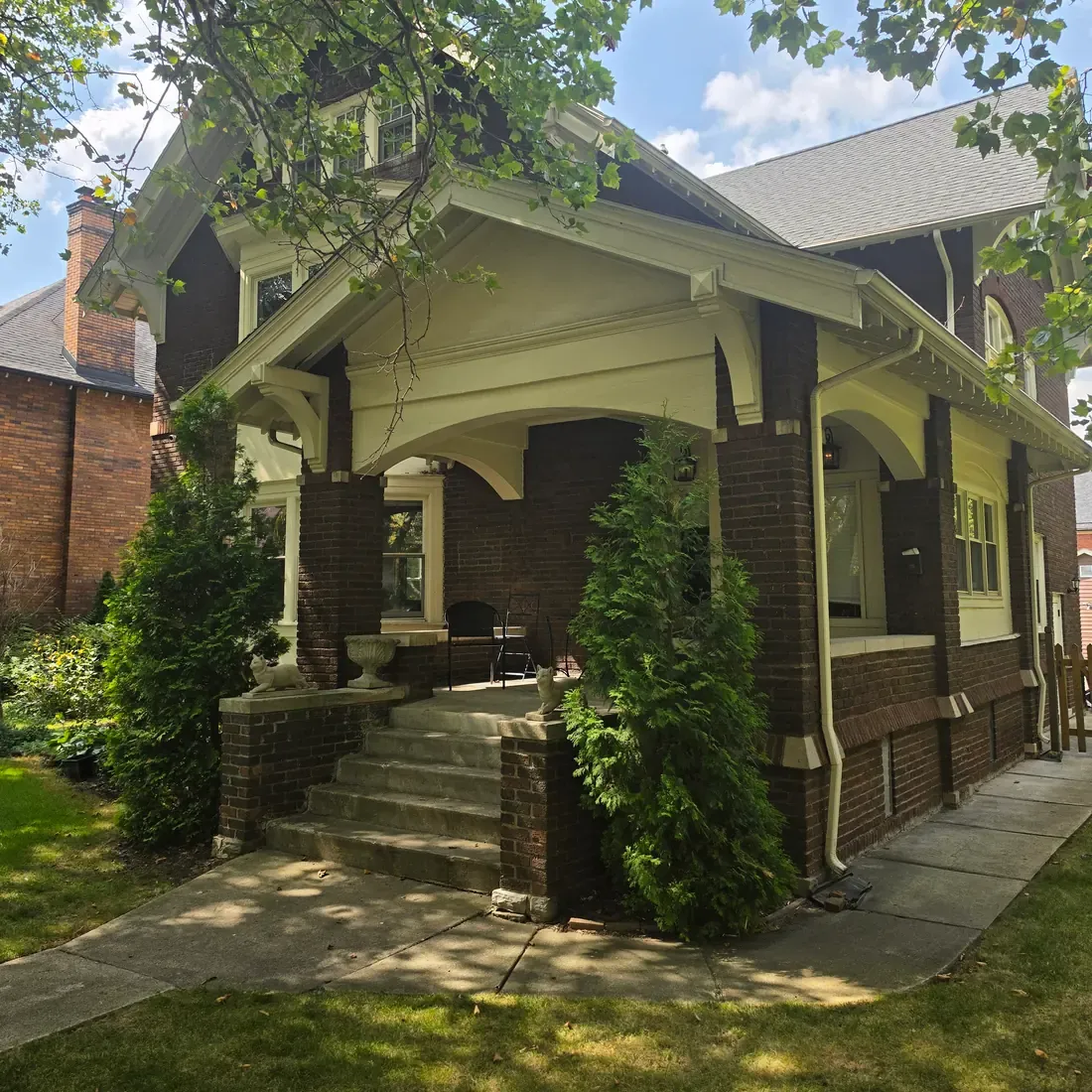
The houses on Pallister are privately owned and privately maintained. The ground between them belongs to everyone, which makes it harder to look after.
A brick walkway takes different care than asphalt. It settles, it heaves in the freeze, and repairs happen by hand instead of by machine.
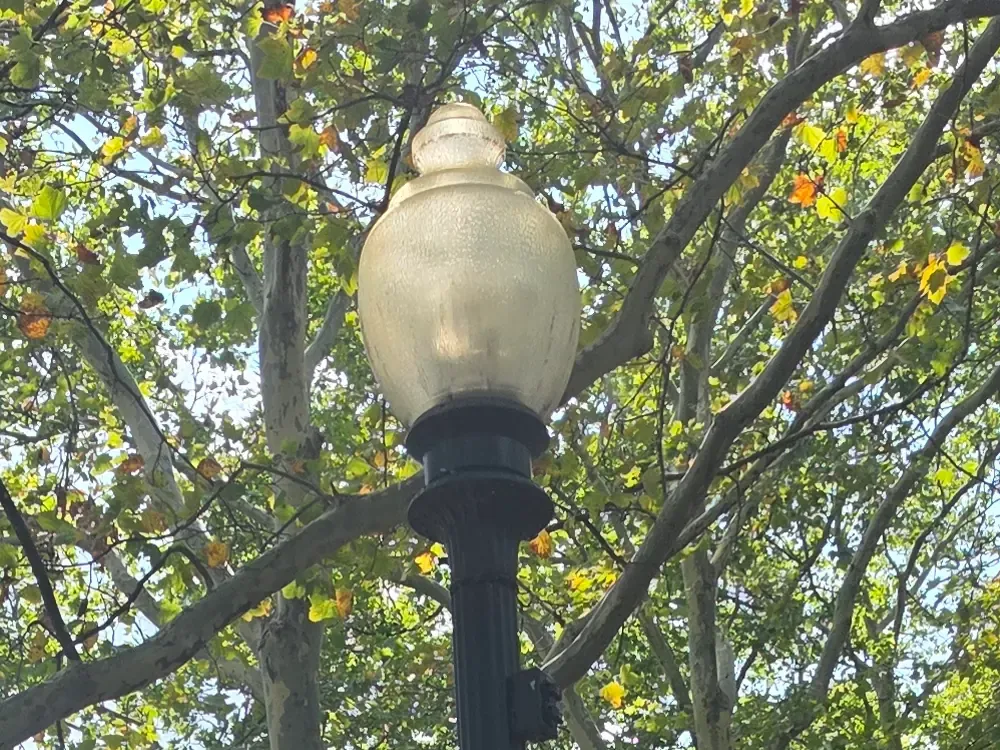
With no vehicle traffic there are no headlights and no highway-scale lighting. The historic standards along the walk are all the lighting the block has.
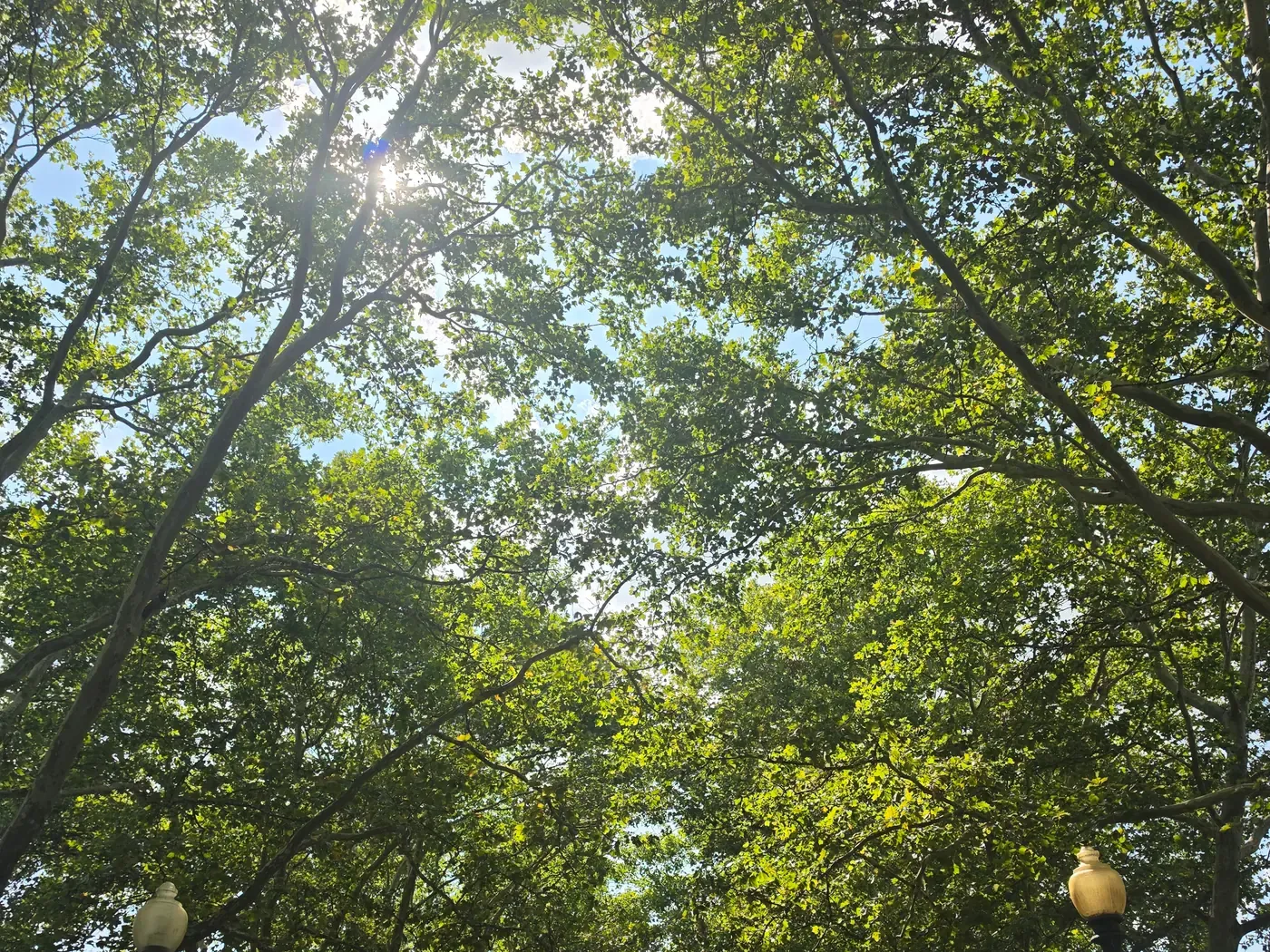
Street trees are most of what makes the walkway usable on an August afternoon. They also have a lifespan, and replacing them takes planning well before the old ones come down.
Historic districts are protected from demolition, but not from deferred maintenance. The shared parts of Pallister (the walkway, the lighting, the trees) fall between what individual owners pay for and what the city budgets for.
We are looking at how neighbors, former residents, and anyone who cares about Detroit's historic districts might help close that gap. Nothing is set up yet. If you want to hear more as it develops, get in touch.